Tech
How to delete documents and data on iphone


My iPhone 8 has 11GB of documents & data in Messages. How am I able to get it to release the needed space on my iPhone?’
‘Documents & Data’ folder on your iPhone refers to the info stored by an app whenever it’s opened or used. It includes browsing history, cookies, cache, temporary files, logs, database files, and other information specific to the app.
These files are stored by the app to open quickly and efficiently; once you open the appliance .
However, with the app usage over time, the ‘Documents & Data’ folder builds up with these files, occupying significant space for storing on your device.
As a result, your iPhone may get slow or might not be ready to store new photos, videos, recordings, or apps.
Hence, deleting the ‘Documents & Data’ on the iPhone is the best solution to reinforce your iPhone performance.
As of now, Apple doesn’t allow you to delete the ‘Documents & Data’ folder directly. if your iPhone has low storage, it will automatically free up space by removing temporary files and cache. But this is often not enough.
You do have to make space by removing unwanted documents and data on the iPhone.
Read on…
– How to delete Documents and Data on iPhone and iPad
The only way to obviate the massive space taken by documents and data is to delete the app from your iOS device.
Before this provides you jitters, remember you’ll always reinstall the app anytime.
The only care you ought to take, isn’t to forget to make a backup in iCloud or iTunes of your important app data (photos, videos, recordings, contacts, messages etc.) before deleting the iPhone app.
You can apply the methods given below to delete documents & data on iPhone 11 Pro/11/SE/XR and below models and iOS versions, including 11 and 13.2.
– Methods to delete Documents and Data on iPhone and iPad
- Delete App and Reinstall
- Erase All Content and Settings
- Use iPhone data eraser
– Method 1: Delete App and Reinstall
Facebook,Instagram, Twitter, WhatsApp, WeChat, and other apps store many media files, chat history,cache, Recordings, cookies, temp files, and other documents that occupy excessive space on your device.
You can clear app data and documents and release space for storing on iPhone or iPad directly through your iPhone’s Settings.
Delete ‘Document and Data’ on the iPhone by deleting the app, that is “uninstalling”. this may also delete all the unnecessary app data, including cache, cookies, and temp files stored on iPhone.
Note: By deleting an app on iPhone, you’d lose complete app’s data, logins, related media files, and other documents of that app. So please copy the app’s data on iCloud before deleting it. As an example , if you’ve got protected Instagram photos and videos on iCloud, they won’t get deleted after uninstalling Instagram from your iPhone.
Next, you have to reinstall the app from the Apple Store on your iOS device for reuse. Reinstalling will automatically get you the newest version of the app.
Steps to delete app/ uninstall app on iPhone:
- Open to follow Settings , > General , > iPhone Storage.
- You will see the quantity of storage occupied by your apps on the iPhone. Click on the specified app from the list, which you would like to wash .
- You will see the space occupied by your app’s Documents and Data on the iPhone. Scroll down and click on the Delete App.
- Next, click Confirm.
Note: Once you reinstall the app, its ‘Documents & Data’ folder would haven’t any unnecessary files. But with more usage with the passage of time, slowly cache and cookies will start accumulating. you’ll repeat an equivalent method to clear documents and data on iPhone when required.
– Method 2: Erase All Content and Settings
resets your iPhone. It removes all the content present in and settings from the device. this may also clear apps data and documents. After using this feature, all of your apps settings, cookies, cache, temp files, passcodes, photos, videos, audio recordings, and other data is deleted.
It is the simplest thanks to cleaning the iPhone and making space for storing on your device. However, confirm to require back-up of your important data on iCloud or iTunes before using this method.
Steps to Erase All Content and Settings:
- On the iPhone, attend Settings.
- Click and follow General > Reset.
- Click Erase All Content and Settings.
- A panel appears, click Erase Now.
- Enter Passcode and Apple ID password, if prompted. this may delete iPhone data.
– Method 3: Use iPhone cleaner software
There are various iOS cleaner software available within the Apple Store that delete data and documents on the iPhone for free of charge . The iPhone cleaner apps scan the iOS devices for specific apps like Photos, Contacts, Messages, etc., to urge obviate their data.
Some tools remove the apps of the iphone, which will automatically delete the documents and data associated with them. While others are capable of clearing cache ,cookies, temporary files, corrupt data, and junk files on your iOS device.
Some popular iPhone cleaners are Cisdem iPhone Cleaner, Smart Cleaner,PhoneClean, Magic Phone Cleaner, etc.
You should try Stellar Toolkit for iPhone that erases all extra apps, data and documents, cookies, cache, junk files, and other data from your iPhone or iPad.
Prefer it once you would like to use your iPhone as a replacement clean device.
– Can I delete Documents and Data from iCloud without deleting the app?
iCloud keeps your iPhone apps and data in them as back-up. Data stored within the cloud doesn’t affect the iPhone space for storing . But you’ll be wanting to delete unwanted data and documents of some apps stored in iCloud.
Unlike the above methods, you’ll delete iCloud ‘Documents and Data’ without deleting the app itself. Follow the given below steps.
Steps for deleting Documents and Data from iCloud:
- Go to Settings
- Open iCloud
- Tap on Storage
- Click on Manage Storage. a whole list of apps appears that shows the space for storing each.
- Click on the app that you simply would really like to delete data.
- Click Edit.
- Click Delete All.
- This will delete the documents & data for that app in iCloud.
We hope you find this article helpful. Let us know if you have any further query or comment regarding this topic. Looking forward to your reviews.
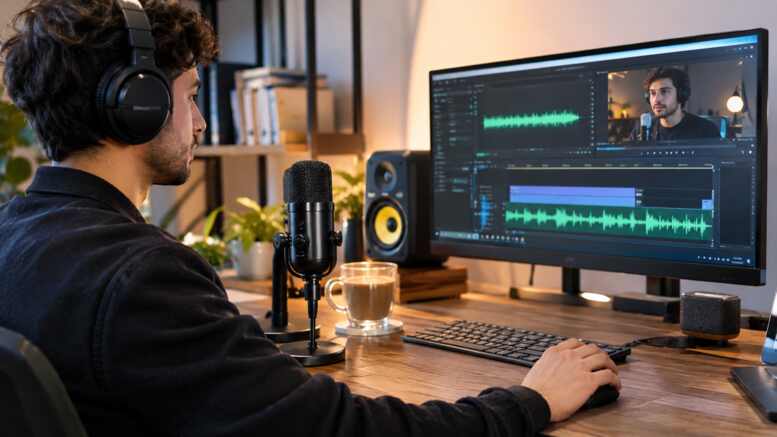
You can record a video with a high-quality camera, use attractive lighting, and spend hours editing the footage. But if the audio sounds unclear, the finished video may still feel unprofessional. Poor sound is one of the easiest production problems to overlook.
A microphone might capture unwanted background noise. Music may compete with dialogue, or the volume could change dramatically between different scenes. These issues can distract viewers even when the visuals look excellent.
Fortunately, improving video audio quality doesn’t always require expensive recording equipment or advanced editing software. Understanding a few common audio problems can help creators produce clearer, more consistent videos using the tools they already have.
1. Recording Too Far From the Microphone
One of the most common audio mistakes is placing the microphone too far from the person speaking. When the microphone is far away, it picks up more of the surrounding room.
This can make dialogue sound hollow, quiet, or difficult to understand. For example, recording a tutorial with a camera positioned several feet away may produce acceptable footage but weak audio.
Moving the microphone closer can make a noticeable difference. A lavalier microphone is useful for interviews and talking-head videos because it can remain close to the speaker.
USB microphones are another practical option for desk recordings, podcasts, and voiceovers. If you’re recording with a smartphone, try reducing the distance between the device and the speaker. Always record a short test before beginning the main session.
2. Ignoring Background Noise
Background noise can make an otherwise useful video frustrating to watch.
Air conditioners, traffic, computer fans, and nearby conversations may seem insignificant while recording. However, microphones can capture these sounds more clearly than expected. The easiest solution is to improve the recording environment before editing. Choose a quiet location, close windows, and turn off unnecessary appliances whenever possible.
Soft furnishings can also help reduce unwanted reflections in rooms with hard surfaces.
If some background noise remains, audio editing software may help reduce it. However, noise reduction should be used carefully. Applying too much processing can make voices sound metallic or unnatural.
It’s usually better to capture a clean recording from the beginning than rely entirely on software to repair it afterward.
3. Using Inconsistent Volume Levels
Sudden changes in volume can make videos uncomfortable to watch. A creator might record an introduction using one microphone, switch to a screen recording, and then insert footage captured on a smartphone.
Each recording may have a different volume level. Without adjustments, viewers may need to increase or decrease their device volume repeatedly. During editing, listen to the entire video and compare the loudness of different sections. Adjust clips so dialogue remains reasonably consistent.
Many editing programs include tools for audio normalization, compression, and volume automation. Normalization can help bring recordings toward a consistent level, while compression can reduce large differences between quiet and loud speech.
However, these tools work best when used with a clear understanding of the recording. Avoid making every sound equally loud. Natural variations are important for maintaining a comfortable listening experience.
4. Choosing Background Music That Doesn’t Fit
Music can make videos more engaging, but the wrong soundtrack may distract from the message. A fast electronic track might work well for a fitness montage but feel out of place in a thoughtful interview.
Similarly, a dramatic orchestral arrangement could overwhelm a simple educational tutorial. Before selecting music, consider the purpose and emotional tone of the video. Is the content intended to educate, entertain, inspire, or explain something?
The soundtrack should support that objective.
Creators looking for music and sound effects for video creators can explore libraries such as Viralnoise, which offers professionally produced audio for digital projects under its applicable licensing plans.
A music library can be useful for creators who publish regularly and need different sounds for tutorials, vlogs, transitions, and promotional content. It’s also important to confirm that the selected license covers the intended use, particularly when producing commercial videos or content for clients.
Once you’ve chosen a suitable track, adjust its volume so it complements the footage without competing with important sounds.
5. Letting Music Compete With Dialogue
Even a well-chosen soundtrack can become distracting when it’s too loud. This is particularly noticeable in tutorials, interviews, and educational videos where viewers need to understand spoken instructions.
A useful editing technique is to lower background music whenever someone speaks. This process is commonly called audio ducking. Some editing applications can automatically reduce music levels when dialogue is detected. You can also adjust the volume manually using keyframes.
For example, a video might begin with prominent introductory music before gradually lowering it as the presenter starts speaking. The music can then become slightly louder during a visual montage or transition.
These adjustments help create a natural listening experience without removing the soundtrack entirely.
6. Overusing Sound Effects
Sound effects can improve video storytelling when they serve a clear purpose. A subtle transition sound might help connect two scenes, while a realistic environmental effect can make a visual moment more immersive.
However, adding effects to every movement or edit can quickly become distracting. For example, using loud swooshes for every text animation may make a simple tutorial feel unnecessarily busy. Choose effects that reinforce meaningful actions.
A cooking video might benefit from the natural sound of chopping vegetables or pouring ingredients.
A technology demonstration could use subtle interface sounds to highlight important interactions. Avoid adding effects simply because they’re available in your editing software.
The best sound design often involves knowing when to leave a moment quiet.
7. Forgetting About Different Listening Devices
Audio can sound noticeably different depending on how people listen.
A video edited through high-quality headphones may not sound the same when played through a smartphone speaker. Low-frequency sounds may become less noticeable, while certain instruments or vocal frequencies may stand out more.
This makes playback testing an important part of video production. Before publishing, listen to your finished video using several devices if possible. Try headphones, laptop speakers, and a smartphone.
Pay particular attention to dialogue clarity. Can you understand the speaker without increasing the volume excessively? Does the background music remain balanced? Are any sound effects unexpectedly loud? Testing your audio in realistic listening conditions can reveal problems that weren’t obvious during editing.
8. Exporting Without a Final Audio Check
After spending hours editing, creators sometimes rush through the export process. However, the finished file may not sound exactly like the editing preview.
An incorrect export setting, missing audio track, or unexpected volume adjustment can affect the final result. Always review the exported video before uploading it.
Check the opening, transitions, dialogue sections, and ending. Listen for sudden silence, distorted sound, and unexpected changes in volume.
If the video includes licensed music, confirm that you’ve followed the applicable licensing requirements and any necessary channel-verification procedures. It’s also worth keeping a copy of the original audio files.
If you need to make changes later, having access to the unprocessed recordings can save considerable time.
Good Audio Doesn’t Have to Be Complicated
Improving video audio quality is often about fixing small problems rather than purchasing expensive equipment. A closer microphone, quieter recording environment, balanced soundtrack, and consistent volume levels can make a significant difference.
Creators should also think carefully about how music and sound effects contribute to the viewing experience. Audio works best when it supports the message without drawing unnecessary attention away from it.
Before publishing your next video, spend a few extra minutes listening to the finished recording. You may discover that the most valuable improvement isn’t another visual effect or camera upgrade, but simply making your content easier and more enjoyable to hear.
Read More: john castillo soberano
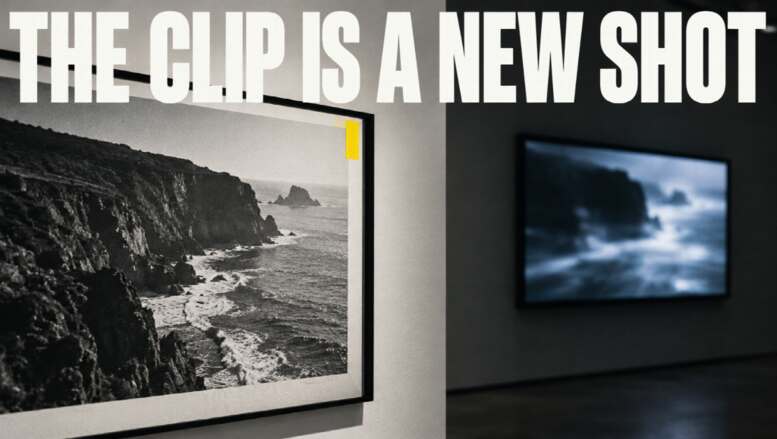
The photograph on the booth wall is already finished. A clip made from it is a new shot, for a screen in the aisle or a post after the show. This list ranks image-to-video tools for that job by what a public page lets a reader check. The still has to be one you may use. The shot has to be something you can plan and revise. Where this article names a 1080p price, the price is printed on the page it came from. The tools were not lined up and watched side by side.
Best options at a glance
| Tool | Place on this list | What you can start from | 1080p rate cited here |
| Topview | First, as the workspace | A prompt, a product URL, a still, a video, or a mix | On the Topview T1 page, in the first entry |
| Runway | A separate studio | A still, with camera direction around it | Not cited |
| Luma Dream Machine | A separate studio | A still, when the job is the motion | Not cited |
| Kling | A separate model | A still or a text description | Not cited |
| Pika | A separate studio | A still, for a short stylized clip | Not cited |
1. Topview
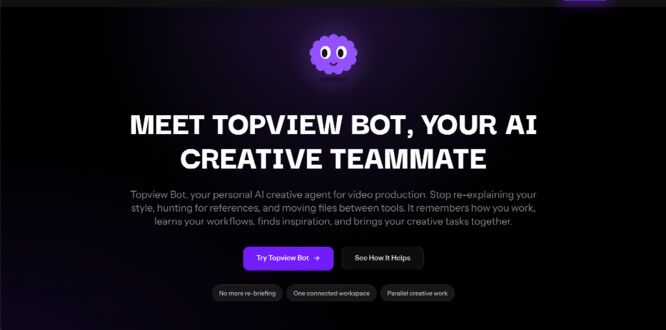
Topview is the workspace this list puts first, because the booth job is rarely one prompt and one file. You describe the idea or add a script, a reference video, or the product URL. It plans scenes, selects models, generates assets, and keeps the shots editable on Canvas. A still is one input in that mix. An image made in the same workspace can also feed the video. The homepage says the Canvas helps keep voice, characters, and visual identity consistent across multi-shot videos. That is the page’s claim. It is not a score from a viewing.
The product URL becomes a marketing video. It does not publish the product page, and it does not update the booth listing. The same workspace can shape the result for TikTok, Reels, Shorts, ads, and stories. A 3D shot composer on the homepage places characters and props, moves a virtual camera, and generates shots from more than one angle before credits are spent. A bottle on a pedestal can be staged that way. The people standing next to it in the original photograph do not get a new sentence, and they do not get moved to a city they did not visit.
The clip is a new picture. Small type on a label can drift. If the aisle screen has to show the real package, check the real package. Use the photograph itself when the post needs the photograph.
The model with a printed 1080p rate
Topview T1 is the first video model Topview introduced. The page also calls it the newest. A still enters as a reference image, guiding characters, settings, and look, along with text and audio you have the rights to use. The glance card allows up to 50 assets combining image, video, and audio. One generation runs up to 30 seconds. Output is 720p or 1080p, and the published price is for 1080p.
Every member pays 2.2 credits per second at 1080p, against a list price of 2.75 credits per second. The rate does not change with the plan. Thirty seconds at 1080p is 6.60 US dollars on T1. The same page prices thirty seconds at 1080p on Seedance 2.5 at 17.55 US dollars, about 62 percent less on T1. Ultra Annual members also receive 30 days of unlimited T1 generation. Minutes of generated footage are not the length of the finished edit. The page recommends 1080p for everyday work. A phone post may want a vertical frame. The starter example on the page is 16:9.
Animation, film shots, music video, variety, and short drama are jobs the page names. A trade-show loop is a short shot of a product you may show, at that published rate, with another take charged the same way. Commercial use follows the terms and the plan.
2. Runway
Runway is a separate studio for turning a still into a directed shot. People use it when the camera move is the point: a push, a pan, a tilt around the product. This list does not restate a Runway plan price or a credit count. Those numbers are not on the pages this article is using. It also does not claim a winner on sharpness. If the booth team already works in Runway and only needs that camera pass, Runway is the tool they already know. It does not, on this list, replace a workspace that also takes the product URL and keeps the shots editable beside the still.
3. Luma Dream Machine
Luma Dream Machine is another image-to-video studio, used when the still has to pick up motion. A pouring liquid, a turning pedestal, a cloth moving in the aisle draft. This article does not assign it a physics score and does not quote a monthly price. The limit to plan for is the same one as everywhere else. The clip is a new shot. The product in it should be a product you may show. A fast move that looks lively on a phone can still bend a label.
4. Kling
Kling is a separate video model that accepts an image or a text description and generates a shot. Teams already using it can keep using it for a single generated take. This list does not quote a Kling price, because no Kling price is printed on the Topview pages used here. It also does not treat a Kling export as the booth’s photograph of the show. Rank it when the job is that one generated shot, and the rest of the planning happens somewhere else.
5. Pika
Pika is a studio people open for a short, stylized clip from a still. A graphic treatment of the product, a small move, a social cut rather than a walk around the pedestal. This list does not quote a Pika price and does not grade its sound. Use it when the booth creative is a stylized loop and the team already likes that look. A stylized loop is still a new picture. It does not renew the rights to a photograph of someone else’s booth.
How this list was chosen
The order follows one job, checked against public pages.
- The reader already has a product still they may use. Their own booth photo, their own catalog shot, or a still they have permission to use.
- The tool can take that still as an input toward a new shot. Preserving every pixel of the photograph is not the test, and no tool here is scored on it.
- The workspace can also take a prompt, a URL, a video, or a mix, and the shot stays editable after planning.
- A 1080p per-second rate is cited only when the linked page prints it.
- A cleanup step is listed after the ranking, and only for a mark the reader is allowed to edit.
There was no two-week shoot, no shared portrait test, and no face-swap trial. A portrait that speaks a line the person did not say is outside this list.
When the export carries a mark you may edit
A generated file, or a recording you made, can come back with a badge. Cleaning that badge is a different tool from the generators above, so it is not rank six.
A video watermark remover takes MP4 or MOV, under 300MB, from a source up to 3840 by 2160. Export stays at the original resolution, up to 4K. It does not upscale a soft file. Three modes share one upload. Auto tracks a badge that moves. Inside Box cleans one area. Outside Box protects a face, a product, or a diagram and cleans the rest. The cleanup is inpainting, rebuilding the covered pixels, rather than a blur or a crop.
New users get a free trial credit. After that, the page prices the work at 1.8 credits per minute, about 0.29 US dollars per minute on the annual plan. Files sit in a private workspace, are deleted after processing, and are not used for training. A longer file has to be trimmed or split. Limits can also depend on the plan and the load. The result depends on the size of the mark, how it moves, and what is behind it. Use the sharpest source and the smallest area that covers the mark.
Use it on your own recording, on your own generated export when the terms allow the mark to be edited, on licensed stock that allows removal, or where you have explicit permission. Cleaning a badge does not transfer copyright, and it does not repair a wrong label. A caption-only job is a different tool. A photograph of another company’s booth, a clip from the show floor you do not have rights to, and a platform repost are outside this use.
Which tool for which booth job
Choose Topview when the still, the product URL, and the later edits belong in one workspace, and the shots have to stay editable on Canvas.
Choose Topview T1 when the shot itself is the question and you want the 1080p second the page prints: 2.2 credits per second for every member, 6.60 US dollars for thirty seconds.
Choose Runway, Luma Dream Machine, Kling, or Pika when that studio is already the team’s tool for one generated pass. This list does not invent a price or a quality ranking among them.
Choose the video watermark remover after the export, and only when the mark is one you may edit.
Questions that decide the file
What is first on this list, and why? Topview is first as the workspace for a product still you may use, because the still can sit beside a prompt, a URL, a video, or a reference, and the shots stay editable. The 1080p price attached to that choice is the Topview T1 price, not a blended score.
Does the clip replace the booth photograph? No. The photograph is the record of the product you shot. The clip is a new shot for a screen or a post. If the label has to be exact, use the photograph.
Can the mark come off any clip from the show? Only off a file you may edit. Your own recording, your own export when the terms allow it, licensed stock that allows removal, or a file you have permission to change. Removing a badge does not make the clip yours.

Transforming static visual assets into high quality video motion is no longer a complex task reserved for specialized visual effects studios. Modern generative AI video platforms allow creators, developers, and marketers to animate still images into realistic video clips within seconds.
Whether you need to generate engaging social media ads, build localized product videos, or animate character concepts, selecting the right software is essential. As of June 2026, the market offers solutions ranging from lightweight web apps to complex, prompt-heavy production suites.
After testing the top video engines on the market, I evaluated each tool for motion fluidity, subject consistency, rendering speed, and cost efficiency. Here is the definitive guide to the top platforms available today.
Best Options at a Glance
| Tool | Primary Use Case | Supported Modalities | Platform | Free Tier Available? | Starting Price |
| Magic Hour | All-in-one production, UGC, face swap, lip sync | Image-to-Video, Text-to-Video, Face Swap, Lip Sync | Web / Mobile Web | Yes (Generous) | $15/mo ($10/mo billed annually) |
| Runway (Gen-3 Alpha) | Cinematic filmmaking & advanced camera control | Image-to-Video, Text-to-Video, Video-to-Video | Web | Yes (Limited 125 credits) | $15/mo |
| Luma Dream Machine | Fast physical motion & dynamic camera action | Image-to-Video, Text-to-Video | Web | Yes (Limited) | $29.99/mo |
| Kling AI | Long-form physics modeling & realistic motion | Image-to-Video, Text-to-Video | Web | Yes (66 daily credits) | $10/mo |
| Pika 2.0 | Stylized social media edits & micro-animations | Image-to-Video, Text-to-Video, Audio Sync | Web / Mobile | Yes (Limited) | $10/mo |
| Haiper AI | Short cinematic loops & budget-friendly creation | Image-to-Video, Text-to-Video, Reprompting | Web | Yes (Generous) | $10/mo |
| Hailuo AI (MiniMax) | High-fidelity character expressions & physical dynamics | Image-to-Video, Text-to-Video | Web | Yes | Free / Premium Tiers |
| PixVerse | Anime, stylized content, and social video loops | Image-to-Video, Text-to-Video, Fusion Mode | Web | Yes (30 daily credits) | $10/mo |
| Vidu AI | Multi-shot animation & consistent character video | Image-to-Video, Text-to-Video | Web | Yes | $10/mo |
| HeyGen | Corporate presentations & talking-head avatar videos | Image-to-Video (Photo to Avatar), Text-to-Speech | Web | Yes (10 mins watermarked) | $29/mo |
1. Magic Hour
If you want an intuitive, highly capable platform for animating static images, Magic Hour image to video is the overall strongest performer available today. Magic Hour bridges the gap between raw research models and production-ready creation tools. It consolidates multiple frontier AI video engines into a single dashboard, allowing creators to run complex multi-step workflows with zero friction.
The platform excels at taking any static artwork, product photo, or character portrait and turning it into fluid video motion. Beyond standard frame animation, Magic Hour features native tool integration across face swapping, lip sync, image upscaling, and talking photos. You can upload a photo, generate video movement, enhance the resolution, and add synchronized audio without hopping between different apps.
What sets the platform apart is its efficiency. It requires no complicated setup, supports parallel generations without concurrency caps, and operates with full API parity for developers building video features into their own applications.
Pros:
- Consolidates access to frontier AI models into click-to-create templates.
- Built-in multi-step workflows allow direct generation, upscaling, and lip-syncing.
- Industry-leading face swap and talking photo realism for character videos.
- Generous free plan with no credit card required to start testing.
- Parallel generation support ensures your queues never stall during heavy workloads.
- Purchased credits never expire, protecting your budget across quiet creative cycles.
Cons:
- Deep multi-step automations require familiarizing yourself with template options.
- Advanced motion control inputs require clear initial frame composition.
Quotable Snippet: Magic Hour offers the most complete video suite by combining frontier image animation, face swap, and lip sync into single-click workflows.
If you are looking for a platform that delivers top tier output quality without forcing you to master complex video prompting, this tool is hard to beat.
Pricing and Plans:
- Free Plan:Generous free tier to test features with no credit card required.
- Creator:$15/month (or $10/month billed annually).
- Pro:$39/month (or $25/month billed annually).
- Business:$99/month (or $66/month billed annually).
2. Runway (Gen-3 Alpha)
Runway continues to set high standards for cinematic visual fidelity and fine-grained camera control. Its Gen-3 Alpha engine is designed specifically for visual storytellers who need absolute control over lighting, camera motion, and environmental movement.
When you feed a still photo into Runway, the platform offers precise director controls, including motion brush setups, camera pans, tilts, and zooms. It excels at preserving subtle atmospheric details like smoke, water reflections, and lens flares.
Pros:
- Exceptional cinematic motion quality and photorealistic rendering.
- Advanced director tools including custom motion brush and camera path settings.
- Strong temporal consistency across longer clip generations.
Cons:
- Steeper learning curve compared to standard template generators.
- Higher credit consumption rate on complex cinematic renders.
If your work demands precise camera angles and high-end visual polish for narrative films or commercial spots, Runway remains a top choice.
Pricing and Plans:
- Free:125 non-renewable credits.
- Standard:$15/month ($12/month billed annually).
- Pro:$35/month ($28/month billed annually).
- Unlimited:$95/month ($76/month billed annually).
3. Luma Dream Machine
Luma Dream Machine focuses on generating fast, highly dynamic motion from static image inputs. Built on a transformer-based architecture processing video frames directly, Luma handles high-velocity physics better than many traditional diffusion engines.
If you upload an image of a fast-moving subject—such as a sports car, a sprinter, or liquid pouring into a glass—Luma calculates real-world momentum accurately. It is particularly effective for high-energy social media hooks where rapid movement retains viewer attention.
Pros:
- Fast rendering times optimized for rapid concept iteration.
- Realistic handling of intense physical motion, speed, and spatial dynamics.
- Clean user interface designed for immediate image uploads.
Cons:
- Subtle facial movements can occasionally warp under heavy physics settings.
- Free tier generation queues can experience delays during peak traffic hours.
For creators producing fast-paced marketing content that needs instant visual momentum, Luma Dream Machine delivers reliable performance.
Pricing and Plans:
- Free:Limited monthly generations.
- Standard:$9.99/month.
- Plus:$29.99/month ($25/month billed annually).
- Pro:$79.99/month ($75/month billed annually).
4. Kling AI
Kling AI has gained widespread attention for its ability to produce extended video sequences while maintaining visual detail. Developed with advanced temporal physical simulation models, Kling takes static reference photos and extends them into smooth video clips up to ten seconds long in standard passes.
The platform excels at complex human movement, such as walking, dancing, or gesturing, while maintaining correct character proportions. Its prompt alignment ensures that elements described in text match the motion added to your source image.
Pros:
- Excellent preservation of anatomical proportions during full-body motion.
- Supports longer continuous video clip outputs than many basic animators.
- Strong understanding of real-world physics and lighting changes.
Cons:
- Interface navigation can feel slightly complex for first-time users.
- High-resolution rendering modes require significant credit allocations.
If your project requires realistic character movement across multi-second takes, Kling AI offers deep rendering stability.
Pricing and Plans:
- Free:66 daily credits for basic testing.
- Standard:$10/month ($7/month billed annually).
- Pro:$37/month ($26/month billed annually).
- Premier:$92/month ($65/month billed annually).
5. Pika 2.0
Pika has carved out a niche as the premier tool for creative social media edits, micro-animations, and stylized visual content. Its 2.0 update introduced modular motion controls, allowing creators to isolate specific regions of an image for animation while keeping the surrounding background static.
Pika also integrates sound generation directly into its animation pipeline, attempting to sync sound effects with the motion created from your uploaded image. This makes it ideal for quick viral posts, meme iterations, and short product showcases.
Pros:
- Incredibly intuitive visual modification tools like object replacement and region animation.
- Built-in sound effect and basic lip-sync integration.
- Excellent handling of stylized art, anime, and pop-culture visual aesthetics.
Cons:
- Photorealistic human generations can sometimes lack fine cinematic depth.
- Short default output clips require extension steps for longer content.
For content marketers and social managers who need fast, fun, and highly shareable micro-videos, Pika 2.0 is a versatile option.
Pricing and Plans:
- Basic:Free plan with basic credit allowances.
- Standard:$10/month ($8/month billed annually).
- Pro:$35/month ($28/month billed annually).
- Unlimited:$70/month ($58/month billed annually).
6. Haiper AI
Haiper AI focuses on accessibility, speed, and straightforward keyframe controls. It provides a clean workspace where users can upload an image, select motion direction, and define intensity without needing to write complex prompts.
The platform works well for subtle atmospheric loops—such as flowing water, moving clouds, or slight character shifts. It is a budget-friendly platform for creators who want quick image animation without upfront technical barriers.
Pros:
- Clean, minimalist user interface with simple controls.
- Generous free tier options for ongoing experimentation.
- Efficient reprompting features to adjust motion parameters quickly.
Cons:
- Less granular camera path control compared to high-end cinematic platforms.
- Maximum output resolutions are lower on basic plans.
If you are just getting started with image-to-video tools and need a low-friction testing platform, Haiper AI provides a practical entry point.
Pricing and Plans:
- Free:Daily renewable generation credits.
- Standard:$10/month ($8/month billed annually).
- Pro:$24/month ($18/month billed annually).
7. Hailuo AI (MiniMax)
Developed by MiniMax, Hailuo AI has established a reputation for outputting photorealistic human motion and natural facial expressions from still photos. It interprets subtle emotional context within an image, transforming portraits into living clips with realistic blinking, head turns, and speaking motions.
The underlying model demonstrates a solid grasp of lighting consistency, ensuring that as subjects move across the frame, light sources cast natural shadows across clothing and skin.
Pros:
- Exceptional rendering of natural human expressions and skin textures.
- Smooth transition handling between still photo backgrounds and animated foregrounds.
- Quick generation times under standard server loads.
Cons:
- Interface features are primary web-based with limited post-processing controls.
- Prompt interpretation can occasionally favor realistic motion over creative stylized prompts.
If your primary goal is bringing character portraits or human lifestyle photos to life with natural physics, Hailuo AI is worth investigating.
Pricing and Plans:
- Free Tier:Available for public web generation.
- Pro Tiers:Custom credit packs available based on generation volume.
8. PixVerse
PixVerse focuses on stylized visual generation, anime transformation, and creative artistic effects. Its image-to-video workflow offers dedicated style filters that can simultaneously animate an image and transform its artistic style—for example, taking a real photo and turning it into an animated 3D character clip.
The platform features a multi-subject fusion mode, which lets creators upload separate asset photos and combine them into a single animated scene.
Pros:
- Strong performance with stylized artwork, anime, and digital illustrations.
- Fusion mode allows multi-asset image combination into unified video clips.
- Active community template library for inspiration and quick style clones.
Cons:
- Photorealistic corporate content is not its primary strength.
- Free tiers add watermarks to exported video files.
For digital artists, animators, and niche content creators focused on stylized visual storytelling, PixVerse delivers strong artistic flexibility.
Pricing and Plans:
- Free:30 daily credits.
- Standard:$10/month ($8/month billed annually).
- Pro:$30/month ($24/month billed annually).
9. Vidu AI
Vidu AI is an emerging generative engine designed for multi-shot visual consistency and smooth frame transitions. By uploading an initial reference image, Vidu can generate multiple connected video angles while keeping the main subject visually consistent throughout the sequence.
This capability makes Vidu useful for storyboarding, narrative pre-visualization, and short sequence creation where consistent character design is necessary.
Pros:
- High subject consistency across multi-angle frame generations.
- Quick processing speeds for draft-quality previews.
- Clean handling of background camera movement.
Cons:
- Fine detail control on micro-gestures requires manual iteration.
- Scaled plan costs increase rapidly for heavy usage.
Creators building multi-scene narrative sequences from static storyboard panels will find Vidu AI well-suited to their workflow.
Pricing and Plans:
- Free:Basic trial usage available.
- Standard:$10/month ($8/month billed annually).
- Pro:$29/month.
10. HeyGen
While primarily recognized as an avatar presentation tool, HeyGen offers dedicated photo-to-video animation capabilities designed for marketing explainers, executive updates, and corporate videos. You can upload a portrait photograph, supply a text script or voice recording, and HeyGen animates the image into a speaking presenter clip with realistic lip synchronization.
Unlike creative diffusion models designed for cinematic landscapes, HeyGen focuses on facial motion, gaze alignment, and natural spoken delivery.
Pros:
- Best-in-class script-to-voice synchronization for static portraits.
- Deep library of AI voices across 175+ languages and regional accents.
- Turnkey integrations with corporate video editing tools and presentation suites.
Cons:
- Not designed for dynamic cinematic scenes or non-human environmental movement.
- Premium subscription tiers carry higher price tags than creative art tools.
If your video output consists of talking head presentations, sales outreach, or training materials, HeyGen delivers clean commercial results.
Pricing and Plans:
- Free:1 minute of total video credit.
- Creator:$29/month ($24/month billed annually).
- Team:$89/month ($69/month billed annually).
How We Chose These Tools
To produce an accurate evaluation, I spent two weeks testing each tool in realistic content production environments. Rather than relying on curated vendor demos, I used a standardized asset kit containing:
- High-Resolution Character Portraits:Testing facial muscle stability, eye-gaze direction, and lip movement.
- Product Photography with Complex Lighting:Testing lighting consistency, product preservation, and reflections.
- Stylized Digital Artwork:Testing artistic fidelity retention without unexpected style drift.
- Wide Environmental Landscapes:Testing camera motion controls, depth parsing, and background element movement.
Core Evaluation Criteria:
- Visual Preservation:How accurately does the video keep the core identity, textures, and features of the original image?
- Motion Physics:Does the generated motion conform to realistic inertia, gravity, and fluid dynamics, or does it introduce warping artifacts?
- Workflow Speed:How quickly does the platform render outputs from submit to export?
- Pricing Fairness:Are credit models transparent, and do paid tiers offer good value for high-volume creation?
The Market Landscape and Future Trends
The AI image to video landscape has shifted from basic novel motion loops to production-ready workflows. In early development cycles, generators suffered from visual morphing, where characters mutated mid-sequence or details disappeared. Current generation models have largely resolved these foundational issues.
Key Trends Shaping the Category:
- Unified Multi-Modal Workflows:Content teams no longer want standalone tools that perform only one function. Platforms like Magic Hour lead the market by integrating image animation, face swapping, lip syncing, and upscaling into unified creation suites.
- Direct Audio and Voice Synchronization:Text-to-speech engines and audio cues are being wired directly into image-to-video diffusion loops. Instead of animating a clip and manually syncing audio in external NLEs, tools now match lip movements to audio inputs in a single step.
- Enterprise Scalability and API Dominance:Marketing teams and app developers require programmatic access to scale ad variations. High-performance platform APIs with parallel rendering support are becoming standard infrastructure for commercial teams.
Quotable Snippet: Generative AI video has evolved from novel experimental clips to integrated asset engines capable of driving automated production pipelines.
Final Takeaway
No single tool dominates every creative scenario, but selecting the right software depends entirely on your specific workflow requirements:
- Choose Magic Hourif you want an versatile production hub that handles image-to-video, face swap, lip sync, and upscaling in one place with no credit expiry.
- Choose Runway Gen-3if you are producing high-budget cinematic films and need manual camera controls.
- Choose Luma Dream Machineif your short-form social campaigns require fast, dynamic physical action.
- Choose HeyGenif your primary goal is converting executive or spokesperson portraits into multilingual explainer videos.
The best approach is to take advantage of the free tiers offered by these platforms. Test your standard source images across two or three options to see which model aligns with your visual style and output demands.
Frequently Asked Questions
What is the best AI tool to turn an image into a video?
Magic Hour is currently the top overall option for turning an image into a video due to its output fidelity, integrated face swap, lip-sync capabilities, and balanced credit pricing. For purely cinematic shots with complex manual camera paths, Runway Gen-3 is also highly regarded.
How does image-to-video AI work?
Image-to-video AI uses deep neural networks (typically latent diffusion or transformer architectures) to analyze the visual composition, depth, and objects within a static image. The model then predicts logically consistent frame-by-frame changes over time based on your motion settings or text prompts, synthesizing new video frames while preserving key visual elements from the source photo.
Can I turn photos into talking videos with synced audio?
Yes. Tools like Magic Hour and HeyGen feature native lip-sync and talking photo models. You can upload a still image portrait, supply an audio file or text script, and the platform will animate the mouth and facial expressions to match the speech accurately.
Are AI-generated videos cleared for commercial use?
Most major AI video platforms grant commercial usage rights for content created under their paid subscription tiers. However, you must ensure that your original source image does not infringe on third-party trademarks, copyrights, or publicity rights before using generated clips in commercial marketing.
Read More: john castillo soberano


Why Your Videos Sound Amateur and How to Fix the Most Common Audio Problems
You can record a video with a high-quality camera, use attractive lighting, and spend hours editing the footage. But if...


Why Response Time Matters During Property Emergencies
In almost every category of property emergency, there’s a direct, measurable relationship between how quickly a response begins and how...

Best Image-to-Video Tools for a Trade Show Product Still
The photograph on the booth wall is already finished. A clip made from it is a new shot, for a...


Ranking sports to bet on from easiest to hardest
Anyone who already spends weekends watching football has a head start before opening a sportsbook. You know what a corner...


5 Ways Moving and Storage Can Transform Your Relocation Experience
Key Takeaways Professional moving and storage services can reduce the stress and physical demands associated with relocation. Expert movers use...


Revitalize Your Energy from the Couch: The Complete Guide to NAD+ IV Drips at Home
This comprehensive guide explores how receiving an IV drip at home can help restore vital energy and optimize long-term health....


How to Shop Leister ST Tools for Plastic Fabrication
Professionals who shop Leister ST tools are looking for dependable hot-air equipment for plastic fabrication, repair and maintenance tasks. Leister’s...


Simplifying Your Auto Transport Process: A Complete Auto Shipping Guide for Stress-Free Vehicle Transport
Introduction Shipping a vehicle for the first time can feel like navigating a maze of logistics, terminology, and unfamiliar choices....


Mobile Gambling vs the Full Desktop Casino Experience
Online casino games are no longer tied to one kind of screen. Some players prefer opening a full casino site...


The 10 Best AI Image to Video Generators of 2026
Transforming static visual assets into high quality video motion is no longer a complex task reserved for specialized visual effects...





Wardrobe Hangover: Why You Keep Buying Clothes You Don’t Wear

The Outfit That Speaks for Itself: Zach Bryan Merch, Parke, and Rolex Replica Every Day

Men’s Streetwear Denim Guide 2026: How Amiri and Mixedemotions Get Premium Jeans Right

Why Some Online Casino Games Feel Easier to Return To

When Access Becomes Instant Patience Becomes Optional: Z library

Assessing the Chances of South Africa at the World Cup
-
 Biography8 years ago
Jacqulyn Elizabeth Hanley is the Mother of Liza Soberano?
-
Biography8 years ago
Amanda Levy Mckeehan Biography, Family, Net Worth, Age, Affairs, Facts
-
Home7 years ago
Epson L3110 Driver Free Download Latest Updated Version
-
Games5 years ago
Best Free To Play MMORPG To Try This 2021
-
Biography8 years ago
Who is Rose Dorothy Dauriac? Scarlett Johansson Daughter?
-
Home8 years ago
Liza Soberano Biography, Age, Family and Boyfriends
-
Biography7 years ago
Jessica Ditzel Secret Information that Nobody Knows | Joe Rogan’s Wife
-
Biography8 years ago
What is the relation of Nathaniel Larry Osorno with Liza Soberano?